
 by
by 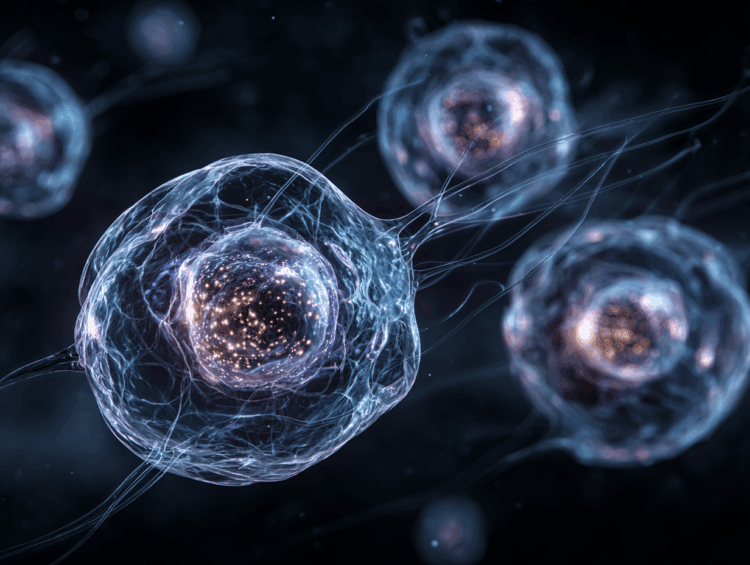
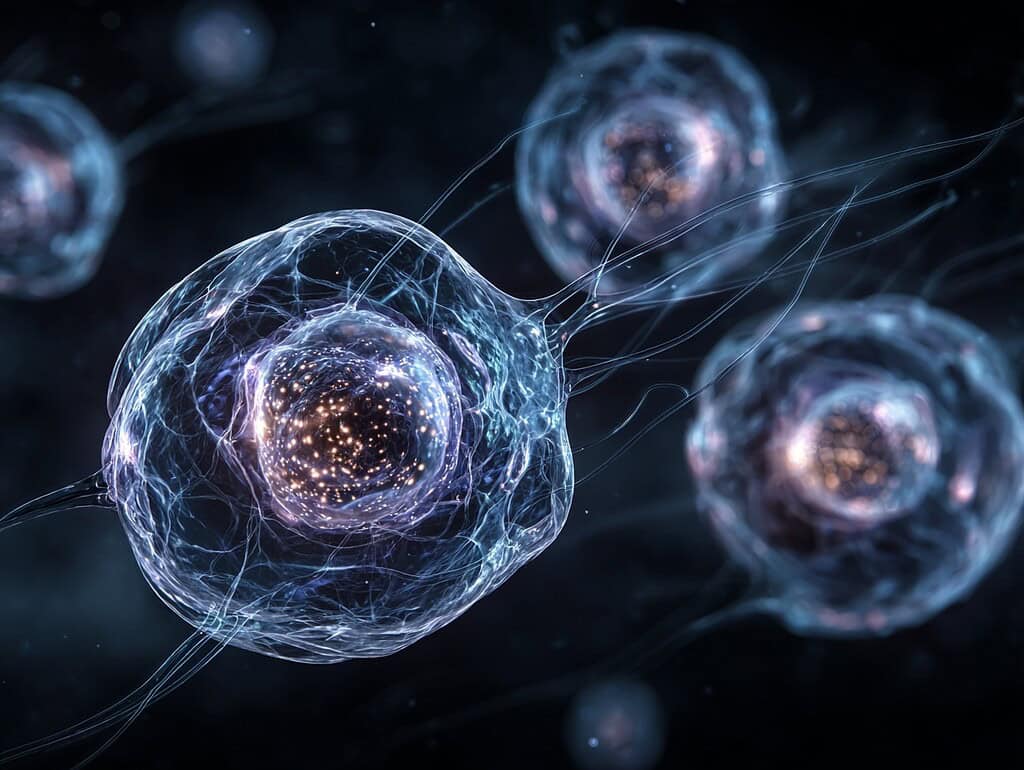
Scientists at the University of Sydney have created a system that emulates natural selection within living mammalian cells, but in a highly controlled environment. They refer to it as PROTEUS, an abbreviation forPROTein Evolution Using Selection. It could potentially alter how we develop everything ranging from gene therapies to proteins that combat diseases.
PROTEUS can be utilized to create new molecules that are precisely adapted to work within our bodies," said co-senior author Professor Greg Neely. "We can employ it to develop new medications that would be challenging or unattainable using existing technologies.
For a while, researchers have employed directed evolution—a method that mimics Darwin's mechanism of mutation and selection within a laboratory environment—to develop enzymes, antibodies, and other molecules for specific purposes. However, almost all these studies have been conducted in basic organisms such as bacteria or yeast. These systems are quick and straightforward to work with, but they do not possess the complexity found in human cells.
What the team led by Neely has achieved is introducing the entire mechanism of evolution within mammalian cells for the first time, effectively and on a large scale.
Replicating Evolutionary Processes Using Engineered Viruses
At the core of PROTEUS is an innovative use of viruses. Rather than using live, virus that can lead to illness, the scientists created hybrid virus-like particles. These are essentially safe containers of genetic material.
These sacs are derived from a revised version ofSemliki Forest Virus, an alphavirus capable of entering mammalian cells. However, the team removed the viral capsid, the protein shell responsible for causing infections, and substituted it with an envelope protein from a completely different virus. This hybrid approach enabled PROTEUS to function safely and effectively.
The outcome is a steady, independent evolutionary system. Each cycle starts when a vesicle containing a target gene enters a host mammalian cell. Inside, faulty enzymes cause mutations. If the altered gene enhances the cell's survival or function — such as activating a crucial protein — the cell promotes the spread of this version of the gene. It represents evolution, sped up to achieve a specific objective. The initial creation of directed evolution, conducted first in bacteria, was acknowledged by the2018 Chemistry Nobel Prize.
The development of directed evolution altered the course of biochemistry," stated Dr. Cristopher Denes. "Now, using PROTEUS, we have the ability to instruct a mammalian cell with a genetic issue that we don't yet know how to address.
Improving Tools for the Human Body
To demonstrate the system's effectiveness, the team subjected PROTEUS to a series of rigorous tests.
First, they tackled a traditional problem: develop resistance todoxycycline, a broad-spectrum antibiotic that typically turns off a synthetic gene in cells. After four rounds of evolution, the system had developed double-mutant forms of a protein known as tTA that continued to function despite the drug's presence.
Then, they focused on a more nuanced issue: Was it possible for PROTEUS to enhance an already very well-optimized gene switch?
Indeed, it could. The scientists utilized a commonly employed genetic regulator referred to asrtTA-3G, which triggers gene activity in the presence of doxycycline. After that, they allowed PROTEUS to operate for 30 cycles.
By the conclusion, the system developed an updated version called rtTA-4G, featuring two minor modifications: D5N and M59I. These adjustments increased the protein's responsiveness by almost six times. In laboratory-grown human embryoid bodies, the improved switch activated genes more effectively than its earlier version, even with minimal drug concentrations.
Importantly, these modifications were effective only in mammalian cells, not in bacterial ones. This was a feat that previous systems had never accomplished.
All the evolutionary experiments were carried out using BHK-21 cells, which originate from baby hamster kidneys. These cells are commonly utilized in virology research due to their limited antiviral interferon response, providing a secure and accommodating setting for replicating RNA-based systems such as PROTEUS.
This decision was intentional. Creating a reliable directed evolution system necessitates high mutation rates and several cycles of replication. In human cells, these characteristics would activate protective shutdown mechanisms.
Nevertheless, although the evolution took place in hamster cells, the molecules it generated were evaluated and functioned effectively in more human-like environments.
A Sensor That Detects DNA Damage
One of the most impressive examples occurred when the group applied PROTEUS to develop an intracellular biosensor. More specifically, this involved a nanobody capable of identifying when DNA damage had occurred. This serves as a highly important early indicator in cancer and aging.
The initial nanobody, referred to as Nb139, struggled to locate its target within the cell nucleus. However, after 35 cycles of evolution, PROTEUS developed a variant with one mutation (S26P) that enabled it to accurately detect p53, the well-known protein.tumor-suppressor protein.
In cells treated with cisplatin, a chemotherapy medication that harms DNA, the enhanced biosensor activated within the nucleus, creating small bright spots.
"This initiative shows that the internal activity of Nb139 can be enhanced even more via evolution inside a mammalian cell," the researchers stated inNature Communications.
A Machine Intelligence for Molecules
What sets PROTEUS apart is not only its functionality but also the manner in which it operates.
Just as generative AI tools examine countless possibilities to discover helpful answers, PROTEUS evaluates millions of previously unseen mutations, quickly refining towards improved outcomes. However, this occurs within actual, living cells. Despite the absence of machine learning, deep learning, or any form of artificial intelligence, the system is capable of exploring millions of protein variations generated through random mutations. Because of this, PROTEUS has been compared to a type of biological AI.
This system enables researchers to discover a solution that would typically require a human scientist years to achieve, if it could be achieved at all.
In a particular campaign, they demonstrated that introducing molnupiravir, an antiviral medication, into the cells could further elevate the mutation rate, broadening the evolutionary exploration range.
Notably, PROTEUS is an open-source project.
We opened this system to the research community," Neely said. "We're eager to see how others will utilize it. Our objectives are to improve gene-editing techniques, or to refine mRNA treatments for greater effectiveness and precision.
What’s Next?
The effects of PROTEUS are extensive. Should the technology be modified to function in human cell types other than hamster cells (BHK-21), it may offer scientists tailored or even condition-specific evolutionary environments.
This would represent a major breakthrough in areas such as gene therapy, cancer treatment, synthetic biology, and individualized medicine.
Like any strong technology, there are upcoming challenges. The system's present mutation bias supports specific genetic modifications, and further efforts are required to develop biomolecules with full unbiased variety. However, the team has already started addressing this through minor molecule adjustments.
Using PROTEUS," stated Denes, "we aim to enhance the creation of a new set of enzymes, molecular tools, and treatments.
This narrative first was published onZME Science. Want to become smarter each day?Subscribe to our newsletterand keep up-to-date with the newest scientific updates.
No comments:
Post a Comment