
 by
by 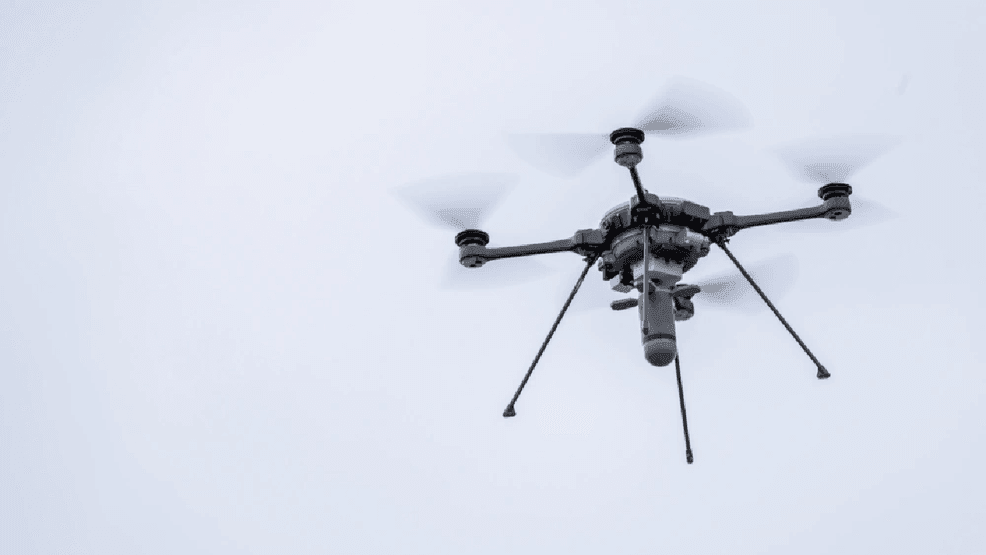
On Thursday, July 3, U.S. Marines from the Advanced Infantry Training Battalion, School of Infantry — East, conducted a live-fire combined arms exercise at Camp Lejeune, demonstrating the Mjölnir lethal payload system deployed via unmanned aircraft systems, marking progress in the incorporation of small unmanned systems at the tactical level, as reported by officials.
Officials stated that the exhibition demonstrated the use of armed small drones, including the SkyRaider and the Neros Archer, synchronized with traditional direct and indirect fire capabilities like mortars and the Javelin missile system. This was part of a set of trials aimed at enhancing combat effectiveness and integrating unmanned aerial systems within the Marine Corps' infantry units.
Authorities stated the following in a statement:
The event represented the first instance in which a program-of-record (a system officially deployed and maintained by the Marine Corps) UAS conducted a live lethal strike at Camp Lejeune. A SkyRaider, a quadcopter utilized by Marines for intelligence, surveillance, and reconnaissance (ISR), released the Mjölnir munition on a specified target, followed by mortar fire and a Javelin attack during a simulated company-level assault.
The Mjölnir is a compact, lightweight gadget approximately the size of a soda can, featuring stabilizing fins and a sensor on its upper part. It is capable of carrying 500 grams of explosives to produce a directed blast of ball bearings via point detonation or an aerial burst utilizing LiDAR technology that initiates the explosion at the optimal time.
The concept of incorporating Mjölnir into the training program began during a visit by Maj. Gen. Anthony Henderson, the Training Command's commanding general, to AITB at the School of Infantry Summit. Maj. Jessica Del Castillo, who leads the Small Unmanned Aircraft School (SUAS) at AITB, was fascinated by Mjölnir's possibilities and proposed combining it with the SkyRaider. Her presentation generated quick interest and led Henderson to assign AITB the task of conducting a live drop within two months to evaluate the potential capability.
"I handled the major planning before the Mjolnir drop: securing the temporary flight clearance approval, performing that type of preparation before the event, and making sure the safety measures were set up for the actual drop," said Del Castillo.
The goal was to conduct small UAS live drops from a program of record system, as well as [Neros Archer] on a Marine Corps-owned range. We aimed to carry it out in our local training area for the first time with all necessary approvals in place, making it legal and a pioneering instance for the program of record system.
To achieve this, Del Castillo's team worked directly with the Naval Air Systems Command (NAVAIR), which is responsible for aviation safety and certification within the Navy and Marine Corps. Since Mjölnir had not yet finished its complete certification process, NAVAIR examined the drone's setup, range control strategy, and safety measures, and finally granted an Interim Flight Clearance (IFC). This temporary approval allowed the SkyRaider to legally transport and deploy a live weapon.
Del Castillo stated that Mjölnir is still under development and has not yet finished the complete safety certification process necessary for the Marine Corps to adopt and utilize it. The purpose of the exercise was not to deploy the system, but to evaluate and showcase its potential as a feasible lethal capability for future operations.
It's not a system that was acquired through the fleet and distributed, and it hasn't completed a full WSESRB (Weapon System Explosive Safety Review Board), which is necessary to confirm its safety," she stated. "We were essentially just taking the car for a test drive. We weren't purchasing it today. We simply wanted to showcase a capability—a lethal one—that the fleet might find beneficial.
The concept of incorporating the Mjölnir into the training program began during a visit by Maj. Gen. Anthony Henderson, the head of Training Command, to AITB at the School of Infantry Summit. Del Castillo, fascinated by the Mjölnir's possibilities, proposed combining it with the SkyRaider. Her presentation generated quick interest and led Henderson to assign AITB the task of conducting a live drop within two months to evaluate the potential capability.
Del Castillo mentioned that the Mjölnir showcased both its capabilities and its shortcomings, pointing out that during the release from the SkyRaider, the weapon exploded early while still in mid-air.
So [July 2] was the first live drop, and that was 15 meters off, which isn't bad for a non-precision system," said Del Castillo. "Today, we observed that the Mjolnir detonated before it reached the ground, so before it initiated a point detonation. And that just demonstrates that, you know, this is still in development. We showed that the capability can be utilized. It can produce neutralization and suppression effects, even though it exploded a bit early during the free fall.
Alongside the SkyRaider, Marines from AITB utilized the Neros Archer UAS to carry out a direct attack on the objective. The Neros Archer is a durable, first-person-view (FPV) drone, approximately the size of a small backpack, featuring four spread-out propellers. Although not an official program, it is included in the DoD’s Blue UAS initiative, which verifies unmanned systems that adhere to rigorous criteria for security, dependability, and compatibility.
The Neros Archer's operator, Staff Sgt. Ryan Welch, affixed an anti-personnel charge equipped with a Kraken Electronic Safe and Arming Device beneath the drone. This charge held a directed explosive filled with hundreds of steel ball bearings. When the drone reached close enough to the target, the operator triggered the device remotely, resulting in a forward-directed explosion similar to a shotgun's spread.
I saw the target and then initiated a detonation about four to five meters away from it," said Welch. "Spread out the shrapnel pattern," he added. "If there had been people where that charge exploded, it would have been devastating. Total destruction of those individuals.
Soaring above the scene was a Stalker UAS offering aerial surveillance with a real-time video stream, which aided in verifying target positions, observing the effects of fires, and maintaining communication among drones, mortars, and Javelins. Staff Sgt. Andrew Ricigliano, an instructor specializing in SUAS, controlled the Stalker during the exercise, achieving the longest uninterrupted Stalker flight at Camp Lejeune, delivering essential support that boosted the overall effectiveness of the operation.
The thing that caught my attention during today's combined arms exercise was the coordination between conventional weapons such as the 81mm mortars and Javelins with the aerial systems being utilized," Ricigliano stated. "Ensuring everything was properly coordinated and secure, considering it's the first time we've conducted this in the most restricted range complex the Marine Corps has available.
Major Matthew Johnson, the operations officer for AITB and the officer in charge of the exercise, highlighted the importance of the work that goes on behind the scenes.
The most enjoyable aspect of today's exercise was witnessing the results of significant efforts to expand the limits of policy and the essential boards and organizations that must collaborate to ensure these systems are secure," said Johnson. "Observing all of this come together in a practical development that enhances the effectiveness of soldiers on the battlefield is an exciting opportunity to be involved in and to observe.
This activity was designed to be one that can be repeated. It is a step we developed to start the process. It is not the conclusion, but rather the initial stage of determining what the use of small arms, from both [program of record] systems and Blue UAS, entails.
We are aiming to create a 'this is how it can be done' example and initiate a discussion on how we can incorporate these systems into our combat formations.
The training exercise was overseen by the commanding general of Training Command, Maj. Gen. Anthony Henderson, aiming to enhance lessons gained from the Marine Corps Drone Attack Team (MCDAT), a specialized unit within the Marine Corps that has been leading trials with unmanned systems in scenarios focused on lethality. Although MCDAT was instrumental in developing early uses of small UAS in strike roles, this event utilized those findings in a live-fire, combined arms setting to evaluate how these systems work alongside conventional infantry firepower.
The Marine Corps' sole school that produces Military Occupational Specialty (MOS) for Small Unmanned Aircraft Systems (SUAS) is situated at AITB, SOI-East, and this event utilized the specialized knowledge available within the battalion to showcase the effectiveness of SUAS in a combined arms setting.
This live-fire advancement was witnessed by delegates from NAVAIR, the Marine Corps Training and Education Command, and the leadership of the 2nd Marine Division. Insights gained from the exercise will guide the development of future tactics, techniques, and procedures (TTP), range and training needs, and acquisition plans for small UAS throughout the Marine Corps.
U.S. Marines from the Advanced Infantry Training Battalion (AITB), School of Infantry – East conducted a live-fire combined arms exercise on July 3, 2025, demonstrating the Mjolnir lethal payload system deployed via unmanned aircraft systems (UAS), representing a major advancement in incorporating small unmanned systems at the tactical level.
The showcase highlighted the deployment of armed small drones, such as the SkyRaider and the Neros Archer, combined with conventional direct and indirect fire capabilities like mortars and the Javelin missile system. The exercise was part of a continuous set of trials aimed at enhancing combat effectiveness and integrating UAS within the Marine Corps' ground units.
The event represented the first instance in which a program-of-record (a system officially deployed and maintained by the Marine Corps) UAS conducted a live lethal strike at Camp Lejeune. A SkyRaider, a quadcopter utilized by Marines for intelligence, surveillance, and reconnaissance (ISR), released the Mjölnir munition on a specified target, followed by mortar fire and a Javelin attack during a simulated company-level assault.
The Mjölnir is a compact, light-weight gadget approximately the size of a soft drink can, featuring stabilizing fins and a sensor on its upper part. It is capable of carrying 500 grams of explosive material to produce a directed blast of ball bearings via point detonation or an aerial explosion utilizing LiDAR technology that initiates the blast at the optimal time.
The concept of incorporating Mjölnir into the training program began during a visit by Maj. Gen. Anthony Henderson, the Training Command's commanding general, to AITB at the School of Infantry Summit. Maj. Jessica Del Castillo, who leads the Small Unmanned Aircraft School (SUAS) at AITB, became interested in Mjölnir's possibilities and proposed combining it with the SkyRaider. Her presentation generated quick interest and led Henderson to assign AITB the task of conducting a live drop within two months to evaluate the potential capability.
"I handled the major planning before the Mjolnir drop: securing the temporary flight clearance, performing that type of preparation before the event, and making sure the safety measures were set up for the actual drop," said Del Castillo.
The goal was to conduct small UAS live drops from a program of record system, as well as [Neros Archer] on a Marine Corps-owned range. We aimed to carry it out in our local training area for the first time with all necessary approvals in place, making it legal and serving as a first-time application for the program of record system.
To achieve this, Del Castillo's team worked directly with the Naval Air Systems Command (NAVAIR), which is responsible for aviation safety and certification within the Navy and Marine Corps. Since Mjölnir had not yet finished its complete certification process, NAVAIR examined the drone's setup, range control strategy, and safety measures, and then granted an Interim Flight Clearance (IFC). This temporary approval allowed the SkyRaider to legally transport and deploy a live weapon.
Del Castillo stated that Mjölnir is still under development and has not yet finished the complete safety certification process needed for it to be adopted and used by the Marine Corps. The purpose of the exercise was not to deploy the system, but to evaluate and showcase its potential as a feasible lethal capability for future operations.
It's not a system that was acquired through the fleet and distributed, and it hasn't completed a full WSESRB (Weapon System Explosive Safety Review Board), which is necessary to confirm its safety," she stated. "We were essentially just testing the car. We weren't purchasing it right now. We simply aimed to showcase a capability—a lethal one—that the fleet might find beneficial.
The concept of incorporating the Mjölnir into the training program began during a visit by Maj. Gen. Anthony Henderson, the head of Training Command, to AITB at the School of Infantry Summit. Del Castillo, fascinated by the Mjölnir's possibilities, proposed combining it with the SkyRaider. Her presentation generated quick interest and led Henderson to assign AITB the task of conducting a live drop within two months to evaluate the potential capability.
Del Castillo stated that the Mjölnir showcased both its capabilities and its shortcomings, mentioning that during the descent from the SkyRaider, the weapon exploded prematurely while still in mid-air.
So [July 2] was the first live drop, and that was 15 meters off, which is quite impressive for a non-precision system," said Del Castillo. "Today, we observed that the Mjolnir detonated before it reached the ground, so before it exploded upon impact. And that just shows that, you know, this is still under development. We demonstrated that the capability can be used. It can have neutralization effects and suppression effects, even though it exploded a bit early during the free fall.
Besides the SkyRaider, Marines from AITB utilized the Neros Archer UAS to carry out an immediate attack on the objective. The Neros Archer is a durable, first-person-view (FPV) drone, about the size of a small backpack, featuring four spread-out propellers. Although it is not an official program system, it is included in the DoD’s Blue UAS initiative, which verifies unmanned systems that satisfy rigorous criteria for security, dependability, and compatibility.
The Neros Archer's operator, Staff Sgt. Ryan Welch, affixed an anti-personnel charge equipped with a Kraken Electronic Safe and Arming Device to the drone's bottom. This charge held a directed explosive filled with hundreds of steel ball bearings. When the drone reached close enough to the target, the operator remotely triggered the device, resulting in a forward-directed explosion similar to a shotgun's spread.
I saw the target and then initiated a detonation about four to five meters away from it. Spread out the shrapnel pattern," said Welch. "If there had been people where that charge exploded, it would have been devastating. Total destruction of those individuals.
Soaring above the scene was a Stalker UAS offering aerial surveillance with a real-time video stream, which assisted in verifying target locations, observing the effects of fires, and maintaining coordination among drones, mortars, and Javelins. Staff Sgt. Andrew Ricigliano, an instructor with SUAS, controlled the Stalker during the exercise, achieving the longest non-stop Stalker flight at Camp Lejeune, delivering essential support that boosted the overall effectiveness of the operation.
The thing that caught my attention during today's combined arms exercise was the coordination between conventional weapons such as the 81mm mortars and Javelins with the aerial systems being utilized," Ricigliano stated. "Ensuring everything was properly coordinated and secure, considering it's the first time we've conducted this in the most restricted range complex the Marine Corps possesses.
Major Matthew Johnson, the operations officer for AITB and the officer in charge of the exercise, highlighted the importance of the work that goes on behind the scenes.
The most enjoyable aspect of today's exercise was witnessing the results of significant efforts to expand the limits of policy and the essential boards and organizations that must collaborate to ensure these systems are secure," said Johnson. "It's an exciting opportunity to be involved in and observe as everything comes together in a practical progression that enhances the effectiveness of soldiers on the battlefield.
This activity was designed to be one that can be repeated. It's a step we created to start the process. It's not the conclusion, but rather the first step in understanding how small arms are used, both from [program of record] systems and from Blue UAS.
We are aiming to create a 'this is how it can be accomplished' example and initiate a discussion on how we can integrate these systems into our combat structures.
The training exercise was overseen by the commanding general of Training Command, Maj. Gen. Anthony Henderson, aimed at applying lessons from the Marine Corps Drone Attack Team (MCDAT), a specialized unit within the Marine Corps that has been leading the way in exploring the use of unmanned systems in lethal situations. Although MCDAT was responsible for many of the initial uses of small UAS in strike roles, this event utilized those findings in a real-world, combined arms setting to evaluate how these systems can be incorporated with conventional infantry firepower.
The Marine Corps' sole School for producing Military Occupational Specialty (MOS) personnel in Small Unmanned Aircraft Systems (SUAS) is situated at AITB, SOI-East, and this event utilized the distinctive resident expertise within the battalion to showcase the effectiveness of SUAS in a combined arms setting.
This live-fire development was witnessed by officials from NAVAIR, the Marine Corps Training and Education Command, and the leadership of the 2nd Marine Division. Insights gained from the exercise will guide the creation of future tactics, techniques, and procedures (TTP), as well as training needs and acquisition plans for small UAS throughout the Marine Corps.
No comments:
Post a Comment