
 by
by US President Donald Trump's proclamation last week that he would bar Harvard University from enrolling new international students put the spotlight back on an unprecedented stand-off between the White House and America's pre-eminent university.
Trump's move came less than a week after a federal court injunction blocked the US Department of Homeland Security's termination of Harvard's ability to host international students.
It was also just hours after the administration threatened Columbia University's accreditation standing , contending that the New York school - like Harvard, an Ivy League university whose founding predated the creation of the United States - had permitted antisemitism on campus.
Do you have questions about the biggest topics and trends from around the world? Get the answers with SCMP Knowledge , our new platform of curated content with explainers, FAQs, analyses and infographics brought to you by our award-winning team.
The hardline measures underscored Trump's determination to keep elite education in his crosshairs as part of a wider culture war that defines his political brand and raise fresh questions about whether they will be able to survive an onslaught that does not appear to have an off-ramp.
With many governmental measures targeting international students - or those from mainland China and Hong Kong, in particular - on national security grounds before US courts, the price that America's most prestigious universities will pay is unclear.
Muddying the picture even more, Trump has made comments over the past week suggesting that Chinese students are welcome, topping them off with an all-caps green light for Chinese students when, on Wednesday, he trumpeted a long-awaited trade deal with China as "done", once Chinese President Xi Jinping approves.
"WE WILL PROVIDE TO CHINA WHAT WAS AGREED TO, INCLUDING CHINESE STUDENTS USING OUR COLLEGES AND UNIVERSITIES (WHICH HAS ALWAYS BEEN GOOD WITH ME!)," he posted on his Truth Social account.
Given Trump's erratic dealmaking approach, it is not known whether the overture amounted to posturing that the president could reverse the moment he hits a snag with China.
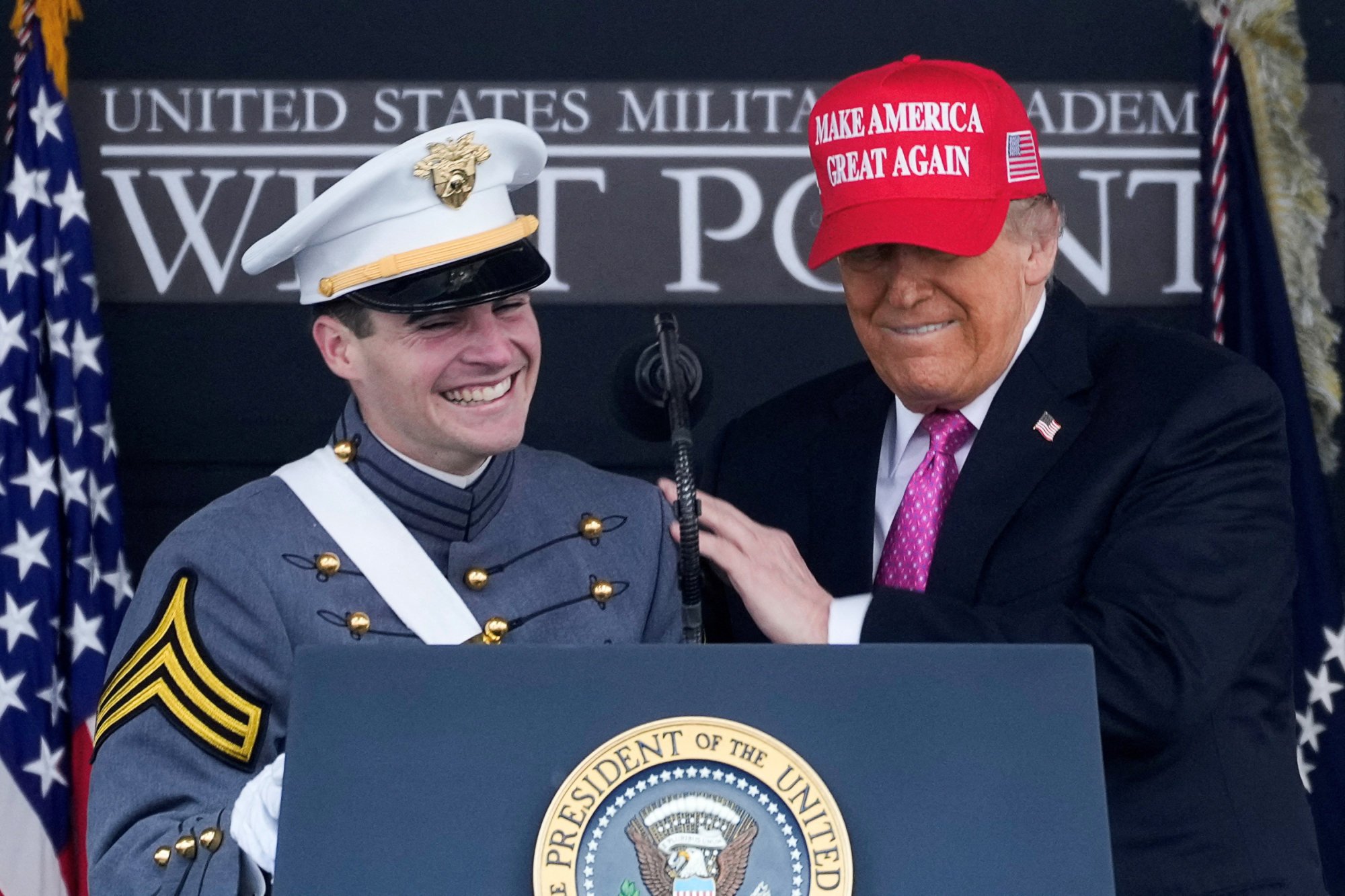
And other measures still stand, including an executive order to intensify scrutiny of international students and staff on campuses and initiatives to review social media posts of visa holders and a State Department directive to stop scheduling student visa interviews as it considers more expansive vetting of the social media profiles of applicants.
Harvard and Columbia are regularly in the headlines. But the finances of many hundreds of colleges - as well as the state economies they support - are just as, if not more, vulnerable to any federal attempt to block international students.
Take, for example, the University of Missouri, in Columbia - the Midwestern state's largest university and a major research centre. According to the Institute for International Education, Missouri is one of 11 US states that derived more than US$1 billion in "economic benefits" from international students in 2024, and the university has a higher-than-average financial dependence on this group.
China ranks second, behind India, as the source of international students attending American schools, but - at nearly 100,000 - Chinese nationals are still the most numerous on the undergraduate level, which is more lucrative because few colleges offer financial aid to students from abroad and undergraduates do not take lower-level academic positions that some graduate students occupy.
The IIE pegs the "economic benefit" in 2024 that Missouri derived from the tuition that international students pay at US$1.1 billion, or 0.31 per cent of the state's total GDP.
That is roughly double the financial contribution that international students brings to California. IIE puts that amount at US$6.4 billion, or 0.16 per cent of the West Coast state's economy, which has the attraction of hi-tech's Silicon Valley, led by Apple, Nvidia and other globally competitive companies.
A similar dynamic plays out among thousands of American universities, where the top 10 schools in US News and World Report's benchmark college rankings, like Harvard - with large endowments and wealthy donor bases - enjoy a degree of financial cushioning that many others do not.
Consider the revenues generated by foreign students relative to total revenues at two private schools: the Washington University of St. Louis in Missouri and Stanford University in California, each with undergraduate populations of just over 8,000.
At 21 in the US News and World Report rankings, Washington University derived an "economic benefit" of US$322 million from its international students in 2024, supporting 3,537 jobs, according to data compiled by the Association of International Educators, also known as Nafsa. That benefit represents 6.3 per cent of the school's 2024 operating budget.
Ranked No 4, Stanford took in US$292 million from overseas students, supporting 3,126 jobs, and representing only 3 per cent of its 2024 expenditures.
Chinese students - and the tuition they pay - have become vital for state universities, particularly after the financial crisis of 2008, when state governments were forced to cut education budgets, according to Yingyi Ma, a professor at Syracuse University and author of Ambitious and Anxious: How Chinese Undergraduates Succeed and Struggle in American Higher Education .
"Chinese students, for many, many years have been full-pay students, if not more," she said. "Some places charge additional fees for international students ... and so the tuition is provide a very important buffer for American universities. Many of them are really cash-strapped, especially the state universities."
For example, the numbers for the University of Delaware, which is subsidised by the mid-Atlantic state's government, reflect an even deeper dependence on Chinese students, who account for as much as 64 per cent of its international student body, according to the school.
Endowments among the most elite schools can also be a differentiating factor when it comes to surviving a dip in international enrolment or any unforeseen financial pitfall. At US$36 billion, Stanford's is three times that of Washington University's US$12 billion and 20 times that of the University of Delaware's US$1.8 billion.
It is not clear how aggressive the State Department will be in carrying out Secretary of State Marco Rubio's pledge to "aggressively" revoke visas issued to Chinese students, particularly those with "connections to the Chinese Communist Party or studying in critical fields".
Asked a day after Rubio's announcement to explain how applications for student visas would be reviewed, State Department spokeswoman Tammy Bruce declined, citing national security and saying she would "not be getting into the details not only ... regarding the scrutiny and the methods regarding the visa itself, but also when it comes to critical fields".
The department did not immediately respond to a query on Wednesday about Trump's welcome to Chinese students earlier in the day.
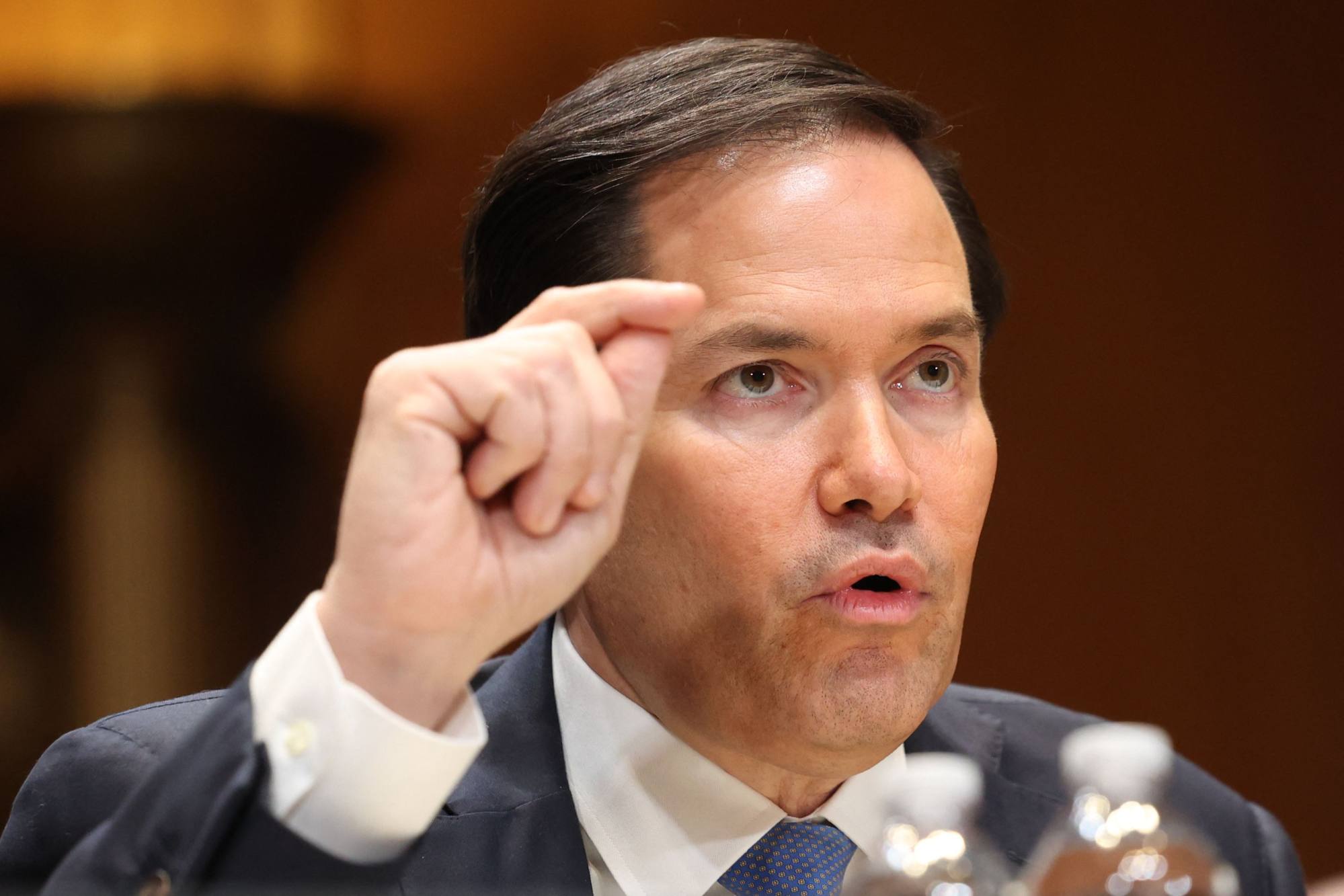
Since STEM fields - science, technology, engineering and mathematics - are generally understood to be what most governments consider "critical", the new visa policy could significantly harm the Missouri University of Science and Technology.
Nafsa estimated the economic benefit that international students bring to the school, , another state-financed institution, at US$32 million, which represents 14 per cent of its revenues for the full year 2024.
More generally, hundreds of American universities beyond the top 10 face more daunting challenges if Rubio's cuts are substantial. And many prospective Chinese applicants are already making contingency plans.
Under the new circumstances, said Tracy Shao, a study-abroad consultant, Chinese students and their parents are worried.
"Despite the impact on confidence, families with sufficient economic strength on the mainland still choose the United States as their first choice for studying abroad, and would rather take risks to go there," Shao said.
"However, due to the current situation, families applying to American universities now also apply to some top universities in Hong Kong and the United Kingdom, no longer considering the United States as the only choice, and the number of mixed applications has increased significantly."
David You, 23, a computer science and engineering graduate student at the Georgia Institute of Technology, said that for students who have not yet come to the US, concern over Rubio's policy is inescapable.
"My visa is only valid for one year, so I'm kind of stuck in here," he said. "Same thing happened to my friends as well.
"We decided not to go back to China for summer vacation because we're afraid that we're not able to return to US afterwards."
Additional reporting by Carl Zhang in Hong Kong
More Articles from SCMP
Bursting of US exceptionalism bubble a boon to Chinese stocks
Meet Liam Neeson’s sons, Micheál and Daniel: they still take inspiration from the Taken star’s late wife Natasha Richardson, but what about his friendship with his Naked Gun co-star, Pamela Anderson?
Calls to rush Fan Zhendong back into China table tennis team after perfect showing
Firefighters put out blaze in busy Hong Kong shopping district
This article originally appeared on the South China Morning Post (www.scmp.com), the leading news media reporting on China and Asia.
Copyright (c) 2025. South China Morning Post Publishers Ltd. All rights reserved.
No comments:
Post a Comment